Brookmill Park was originally a site for a reservoir which supplied water to parts of South East London. This reservoir became disused in 1862. During the creation of the park, It was going to be completely removed but local residents campaigned to retain part of it and this is the pond that we see today. The pond was originally designed as an ornamental pond to house fish and ornamental plants. It is concrete lined with steep, hard edges which pose a challenge for many of our valuable aquatic animals to move in and out of the pond. Since its conversion it has rarely been dredged; the last 20 years build-up of sediment is quite substantial, producing a lot of nutrients which creates a perfect habitat for duckweed to grow and multiply.
How it all started
The Ponderers formed in September 2021 after a decision to remove the duckweed. This proved to be a much harder task than was first thought. In some places it was a couple of centimetres thick! Over the course of the summer, they kept going back, utilising whatever they could to remove it. The best method was for two people to work together with a net curtain to gather it and bring it to the edge where it could be lifted out. This interaction with the pond ignited a passion to improve the water quality and increase biodiversity both in and around the pond.
Plans for the pond's future
After some targeted research, including consultation with various experts, an initial plan was formed – to naturalise the pond by re-purposing the dredged sediment to create new, gently sloping banks. These sloping banks will become a perfect habitat for pond wildlife as they rapidly, naturally self-populate with plants.
Careful observation of changes to the habitat over the last 3 years has informed the group on what could be done next to improve the area. Dredging has to be done slowly over a period of time to minimise impact on existing wildlife. Meanwhile small interventions can be made, such as gathering sticks together to make nesting islands for the birds, which are frequently used.
Surrounding area
The Ponderers also work on the area immediately surrounding the pond, creating new habitats and improving existing ones.
Some of the work they have done to date is:
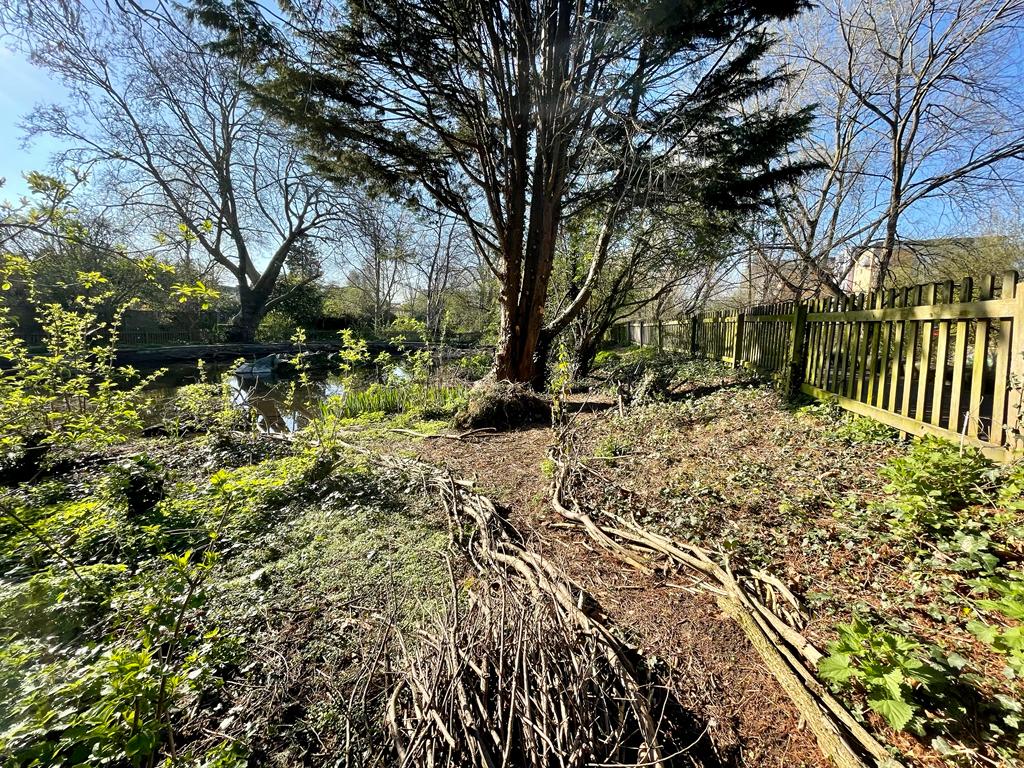
• Creating paths: developing a path that goes the full way around the pond, making access and working easier. It also lets plants thrive without being trampled on and the earth to remain airy and light for the species that live in it.
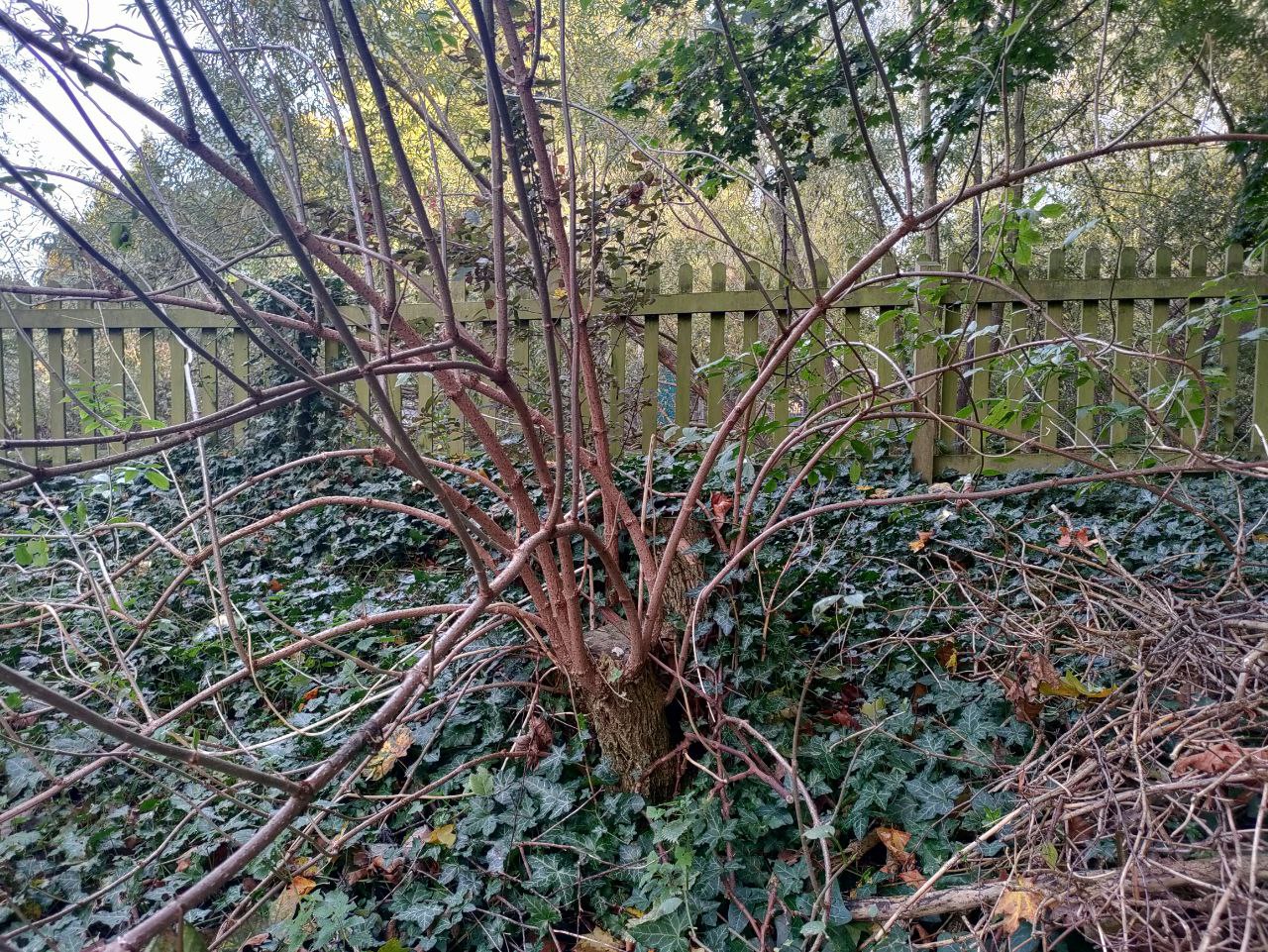
• Coppicing: coppicing trees to develop a shrub layer, an essential part of a woodland ecosystem. Coppicing also extends the life of the plant and allows new growth to appear.
• Hedging: planting a hedge along a stretch of the fence, creating a more natural pond boundary that benefits wildlife as well as lasting many years to come. The hedge is made up of beech, hazel, sweet cherry, dogwood, elder, hawthorn and crab apple. This will be laid like a traditional farm hedge, attracting nesting birds.
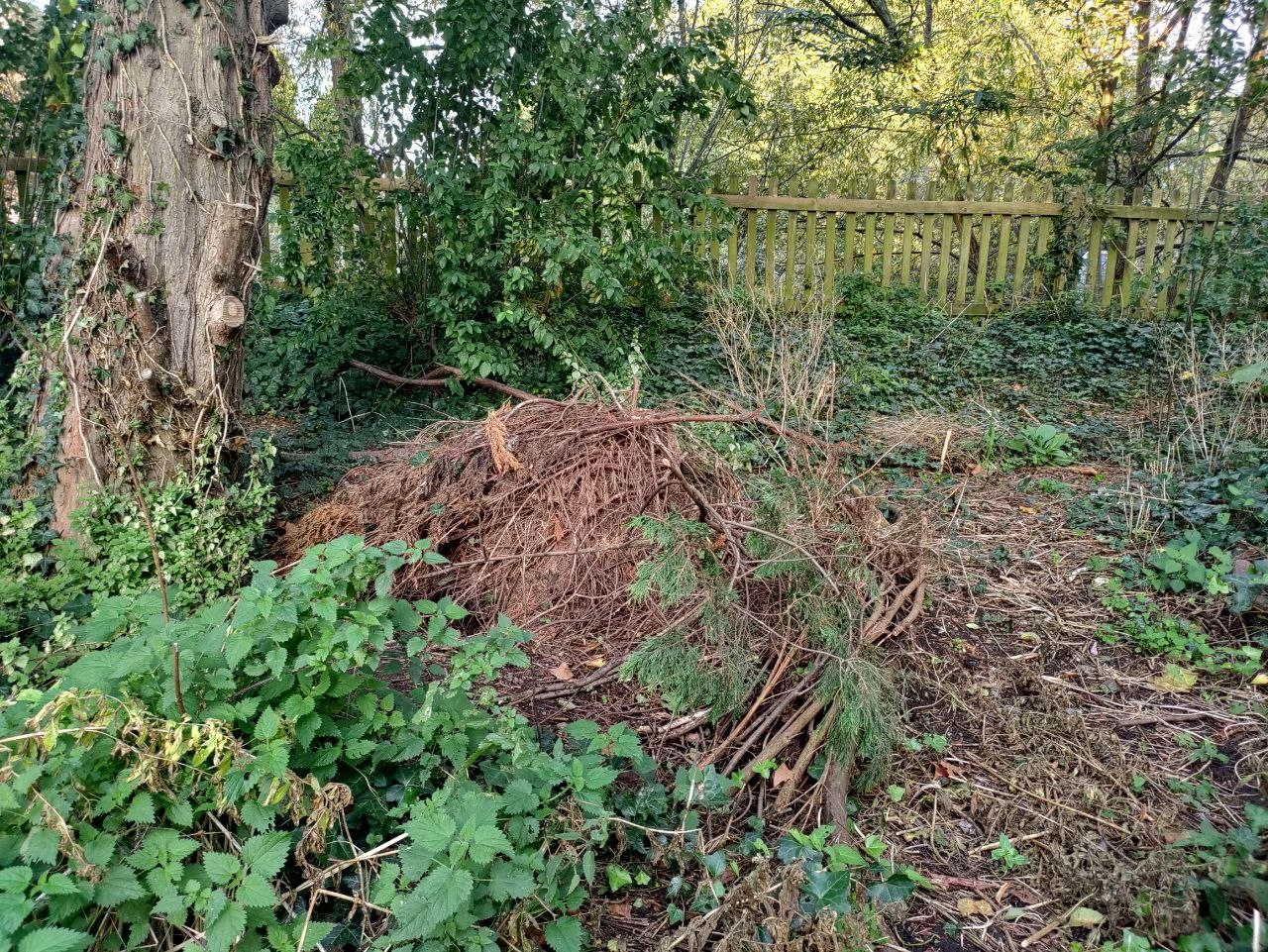
• Wood stacking: utilising fallen branches and coppiced wood to edge the paths and stacking them to create habitats for wildlife.
• Planting woodland species: so far wood anemones and foxgloves have been planted with plans to plant more as we raise the funds.
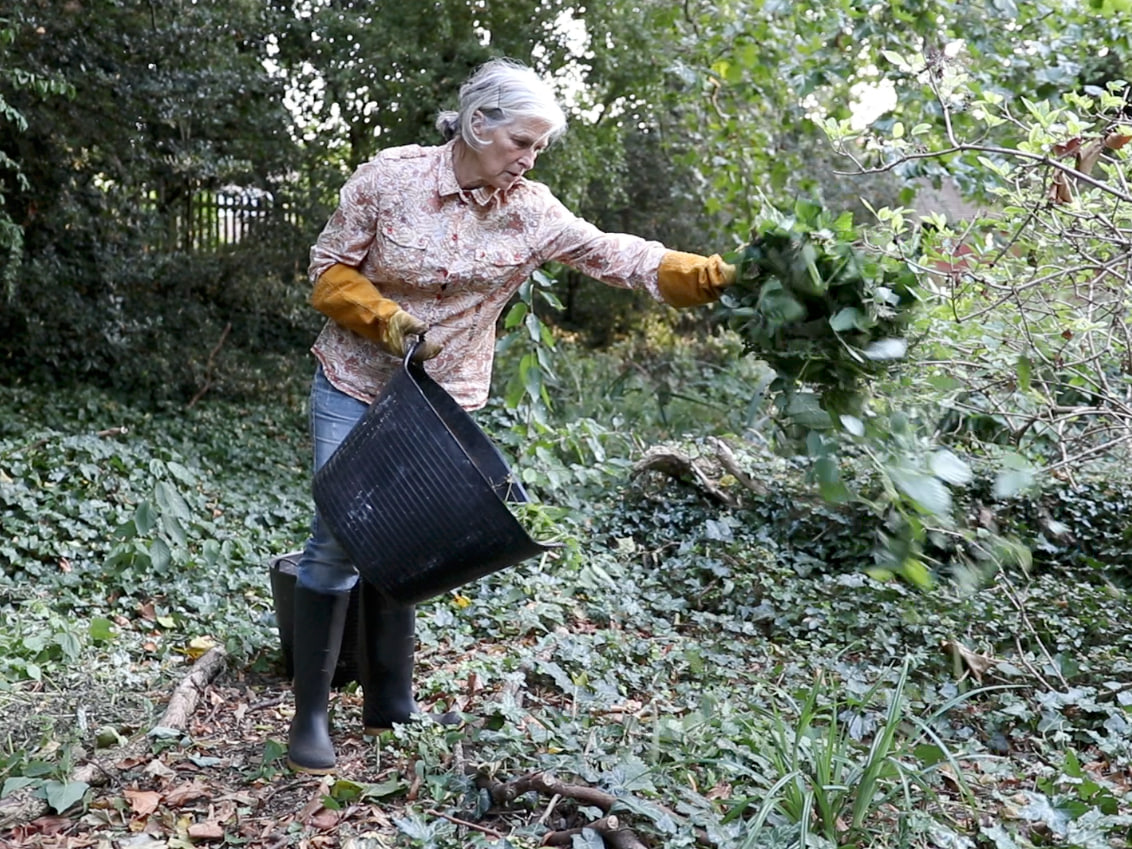
• Recycling plant material: chopping and dropping any cut plant material, such as nettles and brambles, back onto the ground; collecting and dispersing fallen leaves back onto the ground. Doing this allows the plants to decay and feed back into the soil biomass.
Creating Paths
Coppicing
Hedging
Wood Stacking
Recycling Plant Materials
Future Plans
With the help and support of Glendale and Lewisham Council, we have managed to acquire better equipment and aim to develop an efficient ongoing pond maintenance plan.
Dredging will continue as part of our plan for ongoing maintenance. Thanks to funds we were able to buy a pump which captures the much finer sediment that we haven’t previously been able to get out. We plan to concentrate this in one area to create a mini wetland/bog area. We will then plant this up to create hiding spaces for frogs and other small creatures.
We are also looking at developing other areas of the pond in different ways to increase the variety of habitats for wildlife.
About the pond team
As a group the Ponderers are careful not to rush into any decisions regarding developing and maintaining the pond. We enjoy discussion and debate amongst ourselves, around various ideas that we bring to the table. We work carefully and slowly to minimise disruption to the pond wildlife. Our primary aim is to benefit wildlife whilst enhancing public appreciation and understanding of what a wildlife pond can offer, in contrast to an ornamental pond.